Campus Events

  • Entryways: Xenobia Bailey (Through Aug. 9)

    This exhibition continues the collaboration between ICA and New York-based textile studio Maharam, which invites artists to reimagine the windows of ICA’s façade. For the 2025-26 edition, Philadelphia-based artist Xenobia Bailey created a design that reflects her “Funktional” aesthetic and rooted in her decades-long fiber arts practice.

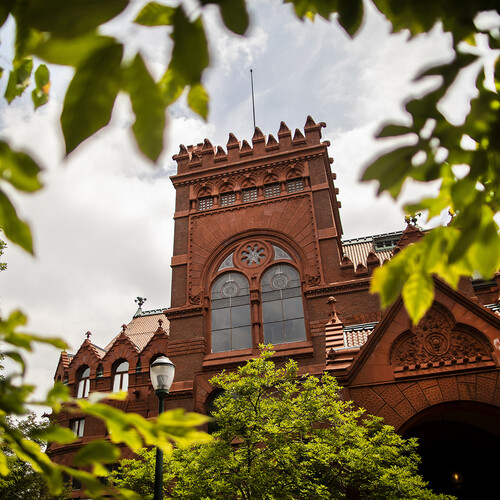
  • Penn Museum exterior
    Re/Make History: Crafting the Past with 21st-Century Tech

    This exhibit features the work of Penn staff and students who created replicas and new works of art in three campus makerspaces: Education Commons, the Bollinger Digital Fabrication Lab, and Venture Lab. Through experiential learning, the contributors to this exhibit cultivated creativity and new technological skills while deepening their appreciation of cultural heritage. Free and open to the public.

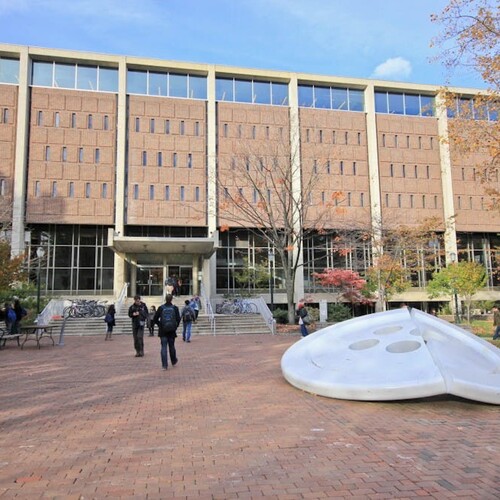
  • Exterior of the Stuart Weitzman School of Design, including sculptures near the building entrance
    Weitzman Lecture Series (Through April 23)

    The Spring 2026 Weitzman Lecture Series offers perspective on some of the most pressing issues facing built environment professionals, cultural leaders, and policymakers today—from climate migration to threats to heritage sites around the world. Speakers will explore the lessons of pandemic-era experiments for public space, the dynamics of urban renewal in Portland following a municipal plan to combat displacement, and how an interest in salt lakes became a mission to save our water systems, among other topics. Free and open to the public. Registration is required for some events.

  • Front steps of Penn Nursing’s Fagin Hall in daylight
    Nursing the Revolution

    Part of America 250 at Penn programming, this exhibit explores the overlooked yet essential role of nurses during the American Revolution, whose vital work helped shape early American healthcare. It challenges the widespread belief that nursing began in the 19th century with Florence Nightingale by providing rare evidence of a world of nursing and caretaking that thrived before, during, and after the American Revolution. Free and open to the Penn community.

  • Van Pelt Library.
    Phil Parmet: Haitian Revolution

    Part of America 250 at Penn programming, this exhibit will feature select photographs by Academy Award-winning cinematographer and Penn alumnus Phil Parmet, who documented life in Haiti after the fall of Jean-Claude “Baby Doc” Duvalier in 1986. This display captures both the "resignation, disappointment, and sadness" and the "strength and determination" felt by the Haitian people during this pivotal time in their history. Free and open to the public.

  • A view of the “Collecting The New Irascibles: Art in the 1980s” exhibition at the Arthur Ross Gallery.
    Exhibit: Collecting the New Irascibles–Art in the 1980s

    “Collecting the New Irascibles: Art in the 1980s” opens a window into the 1980s Lower East Side art scene, where low rents and studio-ready lofts cultivated a dynamic arts ecology. The exhibition, located in the Arthur Ross Gallery, brings together loans from world-renowned collections and highlights several artistic movements of the 1980s that signaled a decisive break from past expectations and a full-force tilt toward the “new.” Free and open to the public.

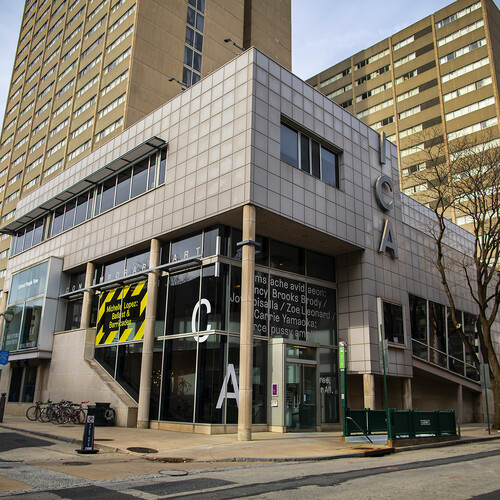
  • ICA exterior
    Exhibit: A World in the Making–The Shakers

    “A World in the Making: The Shakers” explores the design legacy of the Shakers, a religious group whose values of community, labor, and equality shaped their furniture, architecture, and everyday objects. Through works by contemporary artists influenced by the Shakers, alongside original Shaker-made pieces, the exhibition invites reflection on how Shaker ideals continue to inform conversations around inclusion, gender, and intentional living in the 21st century. Free and open to the public.

  • Philadelphia cityscape and skyline.
    Philadelphia and Bicentennial Discontent

    Part of America 250 at Penn programming, this exhibit will showcase materials from various groups who have taken strident critiques of a wholly celebratory approach to American history and the mythos of the founding fathers. The exhibit includes posters, buttons, pamphlets, photographs, and other ephemeral materials—many of them produced by people of color, student organizations, and grassroots groups. Free and open to the public.

  • France, Haiti, and Philadelphia in a Revolutionary Age

    Part of America 250 at Penn programming, this exhibition surveys the revolutions that shook the Atlantic world in the 1790s—and the profound changes that resulted—from France to Haiti to Philadelphia. The books, documents, objects, and images on display will challenge visitors with the questions posed during that revolutionary era. Free and open to the public.

  • Penn Museum exterior
    Ancient Egypt in Watercolors

    On view for the first time in the U.S., this exhibition—blending arts with archeology—features century-old watercolors documenting Egyptian tomb paintings. Created by Egyptian artist Ahmed Yousef during Penn Museum excavations in the early 1920s, these paintings vividly record elaborately decorated funerary chapels from Dra Abu el-Naga, a key burial ground of elite officials and priests during Egypt’s New Kingdom (ca. 1550–1070 BCE). Included with Museum admission.

  • Exhibit: ‘in case of fire, speak’ (Through July 6)

    This exhibition frames the making of a collaborative performance by the Martha Graham Dance Company and PHILADANCO! alongside rarely seen images from modern dancer and choreographer Martha Graham’s 1938 work, “American Document,” and its enduring question, “What is an American?” The mixed-materials display explores Graham’s work alongside Philadelphia dance company PHILADANCO!’s decades-long commitment to preserving and advancing the work of Black artists. Free and open to the public.

  • Allison Zuckerman, Conferring with Grace, 2021. Acrylic, oil, rhinestones, and archival CMYK ink on canvas. A surrealist, vibrantly colorful artwork featuring various animal species, including a leopard, monkey, rabbit, and butterflies.
    Allison Zuckerman: Remixed and Reclaimed

    This exhibition, on view in the Annenberg Center lobby and curated by the Arthur Ross Gallery inaugural faculty director Gwendolyn DuBois Shaw, will present a selection of recent paintings by Penn alum Allison Zuckerman that exemplify her exuberant, layered approach to image-making. Using paint and collage, Zuckerman creates densely constructed compositions that draw from art history, popular culture, and the internet. Her paintings celebrate the history of the image-making medium while reimagining who has the power to shape its future. Free and open to the public.

  • istock art of digital learning
    2026 AI Month at Penn

    AI Month at Penn is a month-long, University-wide initiative throughout April 2026 that will focus on human-centered AI. The month's events will highlight research, dialogues, and collaborations that focus on the link between humanity and technological innovation. Through panels, workshops, lectures, and community events, the initiative highlights work across AI in health, science, education, business, and public life. Register to attend individual events.

  • closeup of a handshake between a man and woman over a table
    Improv for Interviewing

    Participants will learn ways to combat these pitfalls using theater-style improv techniques. Lunch and refreshments will be provided. Free and open to the Penn community. Register to attend.

  • Homelessness, Housing Insecurity, and Aging

    Rebecca Brown, associate professor of medicine (geriatrics) at the Perelman School of Medicine, and Dennis Culhane, a professor in the School of Social Policy & Practice, will discuss the growing issue of homelessness, housing insecurity, and aging populations, including potential solutions and the importance of research at this intersection. Free and open to the Penn community.

  • Public Policy in Practice: Patrick J. Murphy

    The Public Policy in Practice Series, led by Fels Distinguished Fellow Elizabeth Vale, provides students and other participants with a variety of perspectives and personal narratives that help them form opinions on important issues. This lunchtime session will feature Patrick J. Murphy, executive director of the Hilco Global Geopolitical Unit, former U.S. Congressman (Pa.-08), and former Acting Secretary of the Army. Free and open to the public. Register to attend.

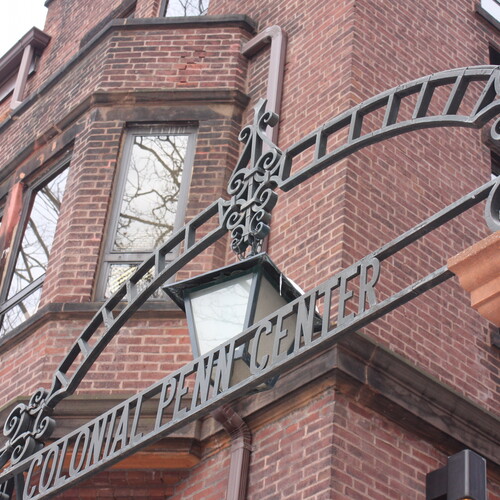
  • Exterior of the Colonial Penn Center.
    Behind Bars, Beyond Health: Equity & Incarceration in America

    This discussion with Jason Schnittker, professor of sociology, about his book, “Prisons and Health in the Age of Mass Incarceration,” moderated by Rachel M. Werner, Penn LDI executive director, will explore the complex and often contradictory relationship between incarceration and health in the U.S., where more than two million people are currently behind bars. The conversation will highlight how incarceration shapes health outcomes not only for those who are confined but also for families, communities, and society at large. Register to attend.

  • Exterior view of Perry World House
    The Making of America’s Iran Policy

    Perry World House and Penn’s Middle East Center will host Dalia Dassa Kaye, a senior fellow at the UCLA Burkle Center for International Relations and director of its Initiative for Regional Security Architectures, for an in-depth conversation about the U.S.-Iran relationship. Drawing insights from her new book, “Enduring Hostilities,” Kaye will discuss the current state of the conflict between the two countries and what lessons should be gleaned from nearly four decades of enduring tensions. Free and open to the public. Register to attend.

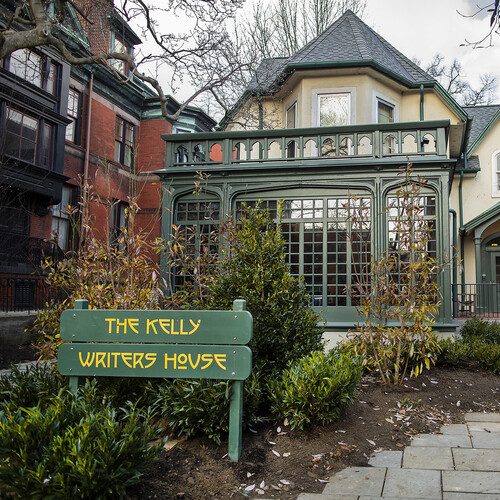
  • Exterior of the Kelly Writers House with a path to the front door.
    Julia Vinograd: Between Spirit and Stone

    This Kelly Writers House program will feature a screening of "Julia Vinograd: Between Spirit and Stone," a documentary about the iconic Berkeley street poet who emerged from the 1960s free speech movement. A lifelong champion of marginalized communities, the “Bubble Lady of Telegraph Avenue” pushed through multiple disabilities to produce more than 70 volumes of poetry, winning an American Book Award, a Pushcart Prize, and Berkeley’s first Lifetime Achievement Award. Free and open to the public. Register to attend.

  • istock art of digital learning
    AI in Action: Insights from PASS Practitioners

    Penn GSE will host a conversation with education leaders who are pioneering the use of AI in their school districts and will share practical strategies, lessons learned, and visions for the future. Participants will discover how AI is transforming teaching, learning, and district operations, and what it means for educators and students alike. This program is open to Penn students, faculty, and staff, as well as K-12 teachers, industry partners, and education researchers. Register to attend.

  • Mei Long, Vicki Aquino, and another person unveil the new PAACH mural at the ARCH building.
    PAACH Mural Unveiling 2026

    The Penn community is invited to join the annual Pan-Asian American Community House Mural Unveiling in celebration of Asian Pacific American Heritage Month and America250. Participants can enjoy a catered lunch and view the mandalas created during PAACH’s mandala coloring events. Register to attend.

  • ‘4 Little Girls’ Documentary

    The Center for Africana Studies at Penn presents a free screening of “4 Little Girls,” a film by Spike Lee that documents the notorious 1963 racial terrorist bombing of the 16th Street Baptist Church in Birmingham during the Civil Rights Movement, which took the lives of four young African American girls. This event will feature a panel discussion with Africana Studies professors Vaughn A. Booker and Marcia Chatelain, as well as Associate Professor of History William Sturkey, moderated by Brian Peterson, director of the Makuu Black Cultural Center. Free and open to the public. Register to attend.

  • Exterior view of Perry World House
    How to Care about Bonaire: Screening & Discussion

    PAR Lab and Perry World House invite the public to the Penn premiere of the new animation “How to Care about Bonaire,” which explores climate justice on the island of Bonaire, one of six Caribbean islands in the Kingdom of the Netherlands. Panelists will discuss some important aspects spotlighted by the film, including coral regeneration, designing climate resilience in the Caribbean, and the intersection of climate justice and agriculture. Free and open to the public. Register to attend.

  • The Revolutionary Age: France, Haiti, and America

    Part of America 250 at Penn programming and convened by the McNeil Center for Early American Studies and the Kislak Center, this conference will focus on the revolutionary upheavals that shook metropolitan France and the French colonies and populations in North America during the late 18th and early 19th centuries. This event will be held in conjunction with the exhibit “The Time to Right all Wrongs: France, Haiti, and Philadelphia in A Revolutionary Age.” Free and open to the public.

  • Person looking at a smartphone.
    Center on Digital Culture and Society 2026 Symposium

    This symposium, organized by the Center on Digital Culture and Society, brings together scholars to foster interdisciplinary dialogue on how affects and emotions are produced, mediated, and circulated. The symposium will focus on affect as both a generative force driving social movements, everyday activism, and social justice work, and as a mechanism that can be leveraged to amplify misinformation, disinformation, and digital tribalism in the face of rising threats to democracy. Free and open to the public. Register to attend.

  • Crowd of pedestrians with data points overlapping over the graphic.
    How AI is Changing the Future of Cities

    This Penn AI Month program will feature presentations by the following Penn faculty: Elizabeth Delmelle (How AI is Changing How We Measure and See Cities); Susan Wachter (AI and the Future of Housing); Erick Guerra (AI and the Future of Urban Mobility); Xiaojiang Li (How AI is Improving How We Respond to Climate Change); and John Landis (In the Age of AI, Will We Still Need Planners?). Free and open to the public. Register to attend.

  • AI Month: Learning AI Image Enhancement

    This workshop will explore how AI-powered image enhancement can reveal fine details in museum objects, such as inscriptions, textures, and underdrawings that are difficult to see with the naked eye or standard photography. Participants will learn how AI-based image enhancement techniques can improve the visibility of details in museum objects and support research, conservation, and documentation. Free and open to Penn students. Register to attend.

  • Coffee with a Codex: Astronomy in Arabic

    Penn Libraries curator Dot Porter will bring out LJS 478, a collection of astronomical treatises, with a particular focus on the astrolabe, dating back to 1228. Free and open to the public. Register to attend.

  • AI Month: Are We Being Deskilled by AI?

    Wharton professors Robert Meyer and Shiri Melumad will explore the latest scientific research on how AI is reshaping the way we think, work, and communicate. This program is presented by Wharton Human-AI Research. Free and open to the public. Register to attend.

  • main story alt tag
    The Abele Lecture: Hazel Ruth Edwards

    Named after the pioneering architect Julian Francis Abele, a 1902 Penn graduate, the Abele Lecture re-centers the voices of Black practitioners and practitioners of color who are reshaping the built environment. This year’s lecture will feature Hazel Ruth Edwards, an award-winning educator, planner, and scholar who will examine how campuses are planned, remembered, and sustained, including what they reveal about belonging, power, and possibility within the built environment. Free and open to the public. Register to attend.

  • Human-Centered AI: The Future of Design

    In this talk, Weitzman alum and Gensler co-CEO Jordan Goldstein will explore how human-centered AI can augment storytelling and spatial design to help organizations navigate complex challenges and create adaptive, meaningful experiences. The talk will be followed by a Q&A. Lunch will be provided. Free and open to the public. Register to attend.

  • The rose garden at the Morris Arboretum.
    Shrubs For All Seasons

    This tour at the Morris Arboretum & Gardens will focus on evergreen and deciduous shrubs for the home gardener, including how shrubs provide showy foliage, vibrant blooms to attract pollinators, and structures for use as natural screens. Participants will meet at the Welcome Center. Free with general admission.

  • All seven members of the Ukulele Orchestra of Great Britain striking poses with serious faces.
    Penn Live Arts: Ukulele Orchestra of Great Britain

    The Ukulele Orchestra of Great Britain returns to Penn Live Arts marking four decades of performances. From ABBA, ZZ Top, and Tchaikovsky to Nirvana, bluegrass, and Broadway, the performance group covers a diverse range of music. Students can receive a discount with Penn ID.

  • Allison Zuckerman, Conferring with Grace, 2021. Acrylic, oil, rhinestones, and archival CMYK ink on canvas. A surrealist, vibrantly colorful artwork featuring various animal species, including a leopard, monkey, rabbit, and butterflies.
    Opening Celebration: Remixed and Reclaimed

    This reception will celebrate the opening of the Allison Zuckerman: Remixed and Reclaimed exhibition at the Annenberg Center for the Performing Arts, featuring art, conversation, and light refreshments. The exhibition, curated by the Arthur Ross Gallery inaugural Faculty Director Gwendolyn DuBois Shaw, presents a selection of recent paintings by Penn alum Allison Zuckerman, exemplifying her exuberant, layered approach to image-making. Free and open to the public. Register to attend.

  • Building facade with symbols of artificial intelligence.
    AI Month: Wharton Hack-AI-thon

    Sponsored by the Wharton AI & Analytics Initiative, the week-long Wharton Hack-AI-thon is a dynamic, co-curricular program where students come together to explore the power of AI through hands-on innovation. This annual team-building event welcomes students of all skill levels to develop practical solutions, learn from experts, and make their mark in the rapidly evolving field of AI technology. Workshops and mentors will provide the guidance needed to be successful in this event. Register to attend.

  • Researching Creatively

    In this Penn Libraries workshop, Penn students, faculty, and staff will learn best practices for bringing creativity into their research practices. Participants will gain insight into key themes from psychological studies of creativity and how they can use the library to find fresh inspiration for research topics. Register to attend.

  • Americanization Politics and the Yiddish Press

    Ayelet Brinn, assistant professor of Judaic studies at the University of Hartford, will explore how anxieties about American Jewish belonging in the years surrounding World War I and World War II shaped the development of the Yiddish press, as well as how that history has been remembered in retrospect. Part of America 250 at Penn programming, this talk is free and open to the public. Register to attend.

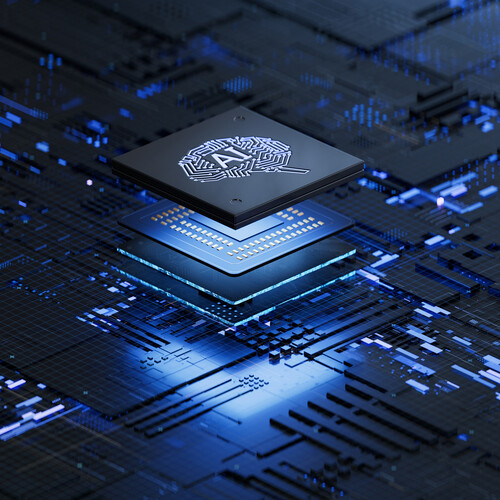
  • A computer chip illuminated and elevated with the letters AI printed on it.
    Copyright, AI, and the Future of Creative Works

    With over 50 lawsuits pending in the U.S. looking at how copyright law applies to AI, the law in this space is being written right now. In this workshop, participants will explore what is happening in these cases, how the law may develop, and the potential implications for both the development of new AI technologies and for creative works in a future where AI is widely incorporated into the tools that people use to produce and distribute their works. Free and open to Penn students, faculty, and staff. Register to attend.

  • Computer code.
    AI Month: Privacy and Artificial Intelligence

    Ryan Calo, founding co-director of the University of Washington Tech Policy Lab, will draw upon historic and contemporary examples to explore the obvious and not-so-obvious ways AI threatens privacy, including what society can do about it. Free and open to the public. Register to attend.

  • Provost’s Distinguished Visiting Faculty Fellow Lecture

    During the Provost’s Distinguished Visiting Faculty Fellow Lecture, American scholar, writer, and activist Salamishah Tillet will deliver the presentation “All The Rage: The Myth, Meaning, and Many Afterlives of Nina Simone.” Free and open to the Penn community. Register to attend.

  • Fireside Chat with Salamishah Tillet

    This conversation will explore how cultural criticism can serve as a bridge between scholarship and the public sphere. Drawing from her extensive work as a writer and Pulitzer Prize-winning critic for The New York Times, Salamishah Tillet will discuss how cultural analysis helps communities make meaning of art, media, and history, and how critics can illuminate the emotional and political stakes embedded in contemporary popular culture, among other related topics. Free and open to Penn students, faculty, and staff. Register to attend.

  • Penn Climate Seminar: Climate Change & Veterinarians

    Andrew Hoffman, Gilbert S. Kahn Dean of Veterinary Medicine at Penn Vet, will discuss the links between climate change and veterinary medicine while highlighting opportunities to engage across schools through a One Health framework. He will also talk about Penn Climate Insights, a new platform originating from Penn Vet that aims to drive climate education, interdisciplinary collaborations, and knowledge-sharing across Penn. Free and open to the Penn community. Register to attend.

  • AI Month: The AI Arts & Sciences Showcase

    The AI Arts & Sciences Showcase features fast-paced lightning talks from Penn Arts & Sciences graduate students and postdoctoral researchers highlighting how they use AI, and the new directions it is opening-across the sciences and humanities. The showcase offers a snapshot of emerging approaches and collaborations shaping the future of research at Penn, including how AI is changing how knowledge is produced across disciplines. Free and open to the Penn community.

  • Democracy and Diversity in the 1970s

    Drawing on his new book “Bicentennial: A Revolutionary History of the 1970s,” Marc Stein, a professor of history at San Franciso State University, will give a lecture revisiting the commemoration of the nation’s 200th birthday. Part of America 250 programming, this talk will highlight the diverse communities and movements that participated and protested, especially in Philadelphia.

  • Exterior of the Kelly Writers House with a path to the front door.
    Speculative Fiction as Truth-Telling

    Speculative fiction writers Alex Smith and Margaret Killjoy will share their work and join in conversation on the role of literature of the imagination—fantasy, science fiction, Afrofuturism, magical realism—in speaking urgent truths and holding up a mirror to society. The program, co-sponsored by Truth and Disinformation in the Writing Arts and the Wolf Humanities Center, will be hosted by Abbey Mei Otis, Penn artist-in-residence and author of Alien Virus Love Disaster. Free and open to the public. Register to attend.

  • AI Month: GeoAI for Disaster Response

    Empowering emergency response teams with effective decision-making capabilities requires the use of geospatial monitoring and advanced AI toolkits for identifying vulnerable communities, developing mitigation plans, and preparing for future events. Participants will learn how AI is used to sift through satellite data, extract insights, and improve relief outcomes. Free and open to the public. Register to attend.

  • Microscopic view of brain neurons.
    AI Month: What AI Reveals About the Learning Brain

    This virtual workshop introduces the use of AI as a thinking partner and learning system, not just a tool for producing answers. Participants will experience how AI can help them extract clarity from their own thinking, ask better questions, and stop starting from scratch. They will also build a simple “second brain” structure they can continue using across coursework, research, and projects. No prior technical experience is required. Free and open to the Penn community.

  • A large body of water with a large drop of water superimposed over it.
    AI Month: Water, Policy, and the Speed of Technology

    The third annual Spring Water Policy Forum will explore how rapidly evolving technologies are reshaping water governance, decision making, and infrastructure management. Convened in partnership with Penn Carey Law and the Penn Program on Regulation, the Forum will bring together policymakers, industry professionals, researchers, and students to discuss how the water sector can adapt, govern, and deploy new technologies responsibly and effectively. Free for Penn students. Secure tickets in advance.

  • Rendering of a brain with signals insinuating AI and data.
    AI Month: Building Creative Organizations with AI

    Sponsored by Wharton Human-AI Research, an expert panel will share practical approaches to challenge mental models, design cultures of experimentation, and use AI as a creative amplifier. Free and open to the public. Register to attend.